
Gambling and Mental Health
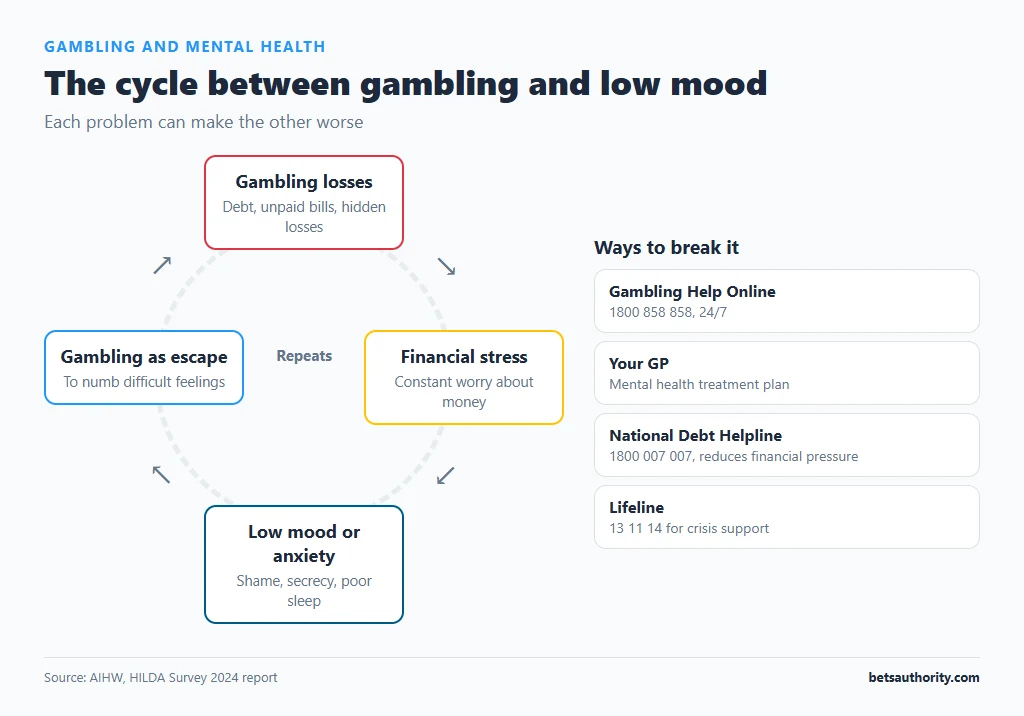
Gambling problems and mental health problems often occur together, and each can make the other worse. Losses create financial stress; stress and low mood make gambling more attractive as an escape; the cycle repeats. The Australian Institute of Health and Welfare (AIHW), drawing on the HILDA Survey, reports that being an at-risk gambler is associated with lower life satisfaction, poorer mental health, high alcohol consumption and financial stress.
This page explains how the two interact, what Australian data shows, warning signs that need urgent attention, and how to get help for both at the same time.
What Australian Data Shows
From the HILDA Survey 2024 report, as summarised by the AIHW:
| Finding | Detail |
|---|---|
| At-risk gambling and wellbeing | Associated with lower life satisfaction, decreased mental health, high alcohol use and financial stress |
| Men who gamble at risky levels | More likely to experience mental health issues and financial stress |
| Women who gamble at risky levels | More likely to report lower life satisfaction and heavy drinking |
| High-risk gambling prevalence | 1.8% of adults in 2022, up from 1.1% in 2018 |
| Other risk factors | Financial risk-taking, smoking and poor general health were linked with higher gambling risk |
These are associations: they show that the problems occur together, not which one causes the other. In practice, the relationship usually runs both ways.
How Gambling Affects Mental Health
- Financial stress. Debt, unpaid bills and hidden losses are a constant source of anxiety.
- Shame and secrecy. Hiding gambling from family increases isolation.
- Sleep. Online gambling is available at any hour; late-night sessions disrupt sleep, which affects mood.
- Mood swings. Wins and losses create highs and lows that can resemble or worsen mood disorders.
- Relationship conflict. Arguments about money and trust add further strain.
How Mental Health Affects Gambling
- People experiencing anxiety or depression may use gambling to escape or numb difficult feelings.
- Low mood can make losses feel less important in the moment and the possibility of a win more appealing.
- Alcohol lowers inhibition and makes it harder to keep to limits.
- Some medications and conditions affect impulse control; if you notice a sudden change in gambling after starting a medication, talk to your doctor.
Warning Signs That Need Urgent Help
Seek help immediately if you or someone you know:
- talks about suicide, self-harm or feeling there is no way out;
- feels that a big win is the only way to fix things;
- is facing a financial crisis such as eviction or losing a job because of gambling;
- is drinking heavily or using other substances to cope;
- is experiencing or using violence at home.
| Need | Contact |
|---|---|
| Immediate danger | 000 |
| Crisis support, 24/7 | Lifeline 13 11 14 |
| Suicide risk, 24/7 | Suicide Call Back Service 1300 659 467 |
| Aboriginal and Torres Strait Islander crisis support | 13YARN 13 92 76 |
| Family and domestic violence | 1800RESPECT 1800 737 732 |
Getting Help for Both
Treating gambling and mental health together works better than treating one and ignoring the other. Options:
- Gambling Help Online (1800 858 858, chat and email, 24/7). Gambling counsellors are used to working with people who also have anxiety, depression or alcohol problems, and can refer you to other services.
- Your GP. A GP can assess your mental health, prepare a mental health treatment plan for Medicare-subsidised sessions with a psychologist, and check whether any medication could be playing a part.
- Beyond Blue (1300 22 4636, 24/7) for anxiety and depression support.
- Financial counselling through the National Debt Helpline (1800 007 007), because reducing financial pressure reduces one of the main stressors.
The full list is on gambling help services.
Practical Steps That Reduce Pressure
| Step | Why it helps |
|---|---|
| Self-exclude through BetStop and each casino you use | Removes access during periods of low mood; see self-exclusion |
| Add a bank gambling block and blocking software | Adds delay between an urge and a deposit; see blocking software |
| Avoid gambling when drinking, tired or upset | These are the moments limits are most often broken |
| Hand day-to-day money management to someone you trust for a period | Reduces both access and worry |
| Keep a simple mood and spending diary | Shows patterns between how you feel and when you gamble |
For Family and Friends
Supporting someone whose gambling and mental health are linked can be draining. Look after yourself as well; Gambling Help Online supports family members directly. See helping a family member.
Recognising the Early Signs
The nine questions of the Problem Gambling Severity Index include two that relate directly to mental health: whether gambling has caused health problems, including stress or anxiety, and whether you have felt guilty about the way you gamble. If you answer “sometimes” or more to either, it is worth talking to someone. Score yourself on signs of problem gambling.
This guide is part of our responsible gambling section, which lists every tool and support service in one place.
Frequently Asked Questions
Australian data shows at-risk gambling is associated with poorer mental health, financial stress and lower life satisfaction. The relationship usually runs both ways: gambling harm adds stress, and low mood can drive gambling.
Treating both together usually works best. Gambling counsellors and GPs can coordinate care and refer you to the right services.
Yes. A GP can assess your mental health, prepare a mental health treatment plan for Medicare-subsidised psychology sessions, and refer you to gambling counselling.
Call Lifeline on 13 11 14 or the Suicide Call Back Service on 1300 659 467 now, or 000 if you are in immediate danger.
AIHW data links risky gambling with high alcohol consumption. Alcohol makes it harder to stick to limits, so avoid gambling when drinking.
If you are struggling, you do not have to wait until things get worse. Call Gambling Help Online on 1800 858 858 or Lifeline on 13 11 14, any time. In an emergency, call 000. Gambling is for adults 18+ only.